Weeknight cooking
Use what you have: cooking from the fridge, not from scratch
Start dinner from what's already in your kitchen. A practical guide to cooking from the fridge, keeping staples, and shopping only for what's missing.
By The Tonight team · September 29, 2026 · 4 min read
Most recipe advice starts at the store: buy these things, then cook. Real weeknights begin the other way around. There's already food in the house, some of it fading, and the question is what to make of it before it goes soft.
Cooking from what you have is a skill, and mostly it's a habit of looking in the right order.
Start with what's about to turn
Open the fridge and sort by urgency, not appetite. Leafy greens, fresh herbs, fish, ground meat and anything cut or opened come first. Roots, cabbage, eggs and hard cheese can wait their turn. A dinner built around the urgent things tastes fresher, wastes less and asks less of you, because the ingredients are already telling you what to do.
For anything on its last legs, ask three questions. Can it be roasted, wilted or blended into something today? Can it go in the freezer today? Does another dinner this week need it too? One yes is usually enough to save it.
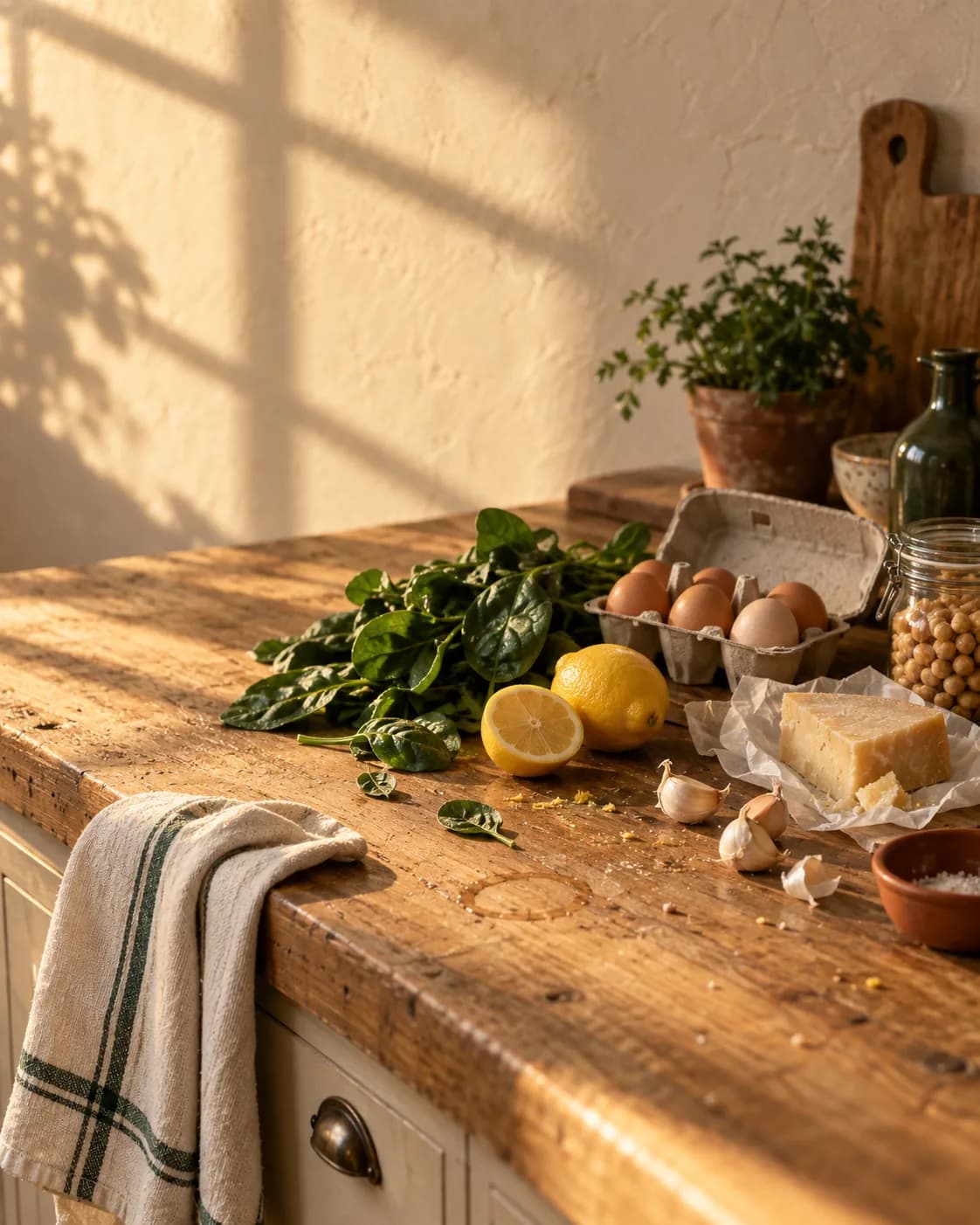
Then pick one thing to be the star and let the rest support it. Wilting spinach, three eggs and the heel of a block of cheese is a frittata. Leeks, a lemon and a can of white beans is a soup that tastes like you planned it. You don't need a recipe so much as a direction.
Staples, and a pantry that keeps itself
Improvised dinners work when a handful of dependable ingredients sit behind them. Think of them as the supporting cast that turns a random collection into a meal.
- Oil, salt and pepper, and something sharp: lemons or a good vinegar.
- Garlic and onions, which keep well and lift almost everything.
- Rice, pasta or another grain that can carry a dinner.
- Canned tomatoes and canned chickpeas or beans.
- Eggs, and butter.
- One thing in the freezer that turns into a meal in a pinch.
Once you know your list, stop thinking about it. Staples shouldn't clutter your shopping list, and in Tonight they don't: mark them once and they're assumed to be there.
The trouble with a mental inventory is that it's wrong within days. You forget the second bag of rice. You're sure there are eggs. Tonight treats your pantry as a belief, not a database. It doesn't ask you to log everything. It starts from what you bought, what you ticked off your list and the staples you've marked, then lets its confidence fade as things age.
Spinach you bought yesterday is a near certainty. Spinach from last week is a maybe. Dinners lean on what's fresh and what's about to turn, and the picture stays useful without you babysitting it. If you like adding things by hand, you can. You never have to.
From the receipt to a list of only what's missing
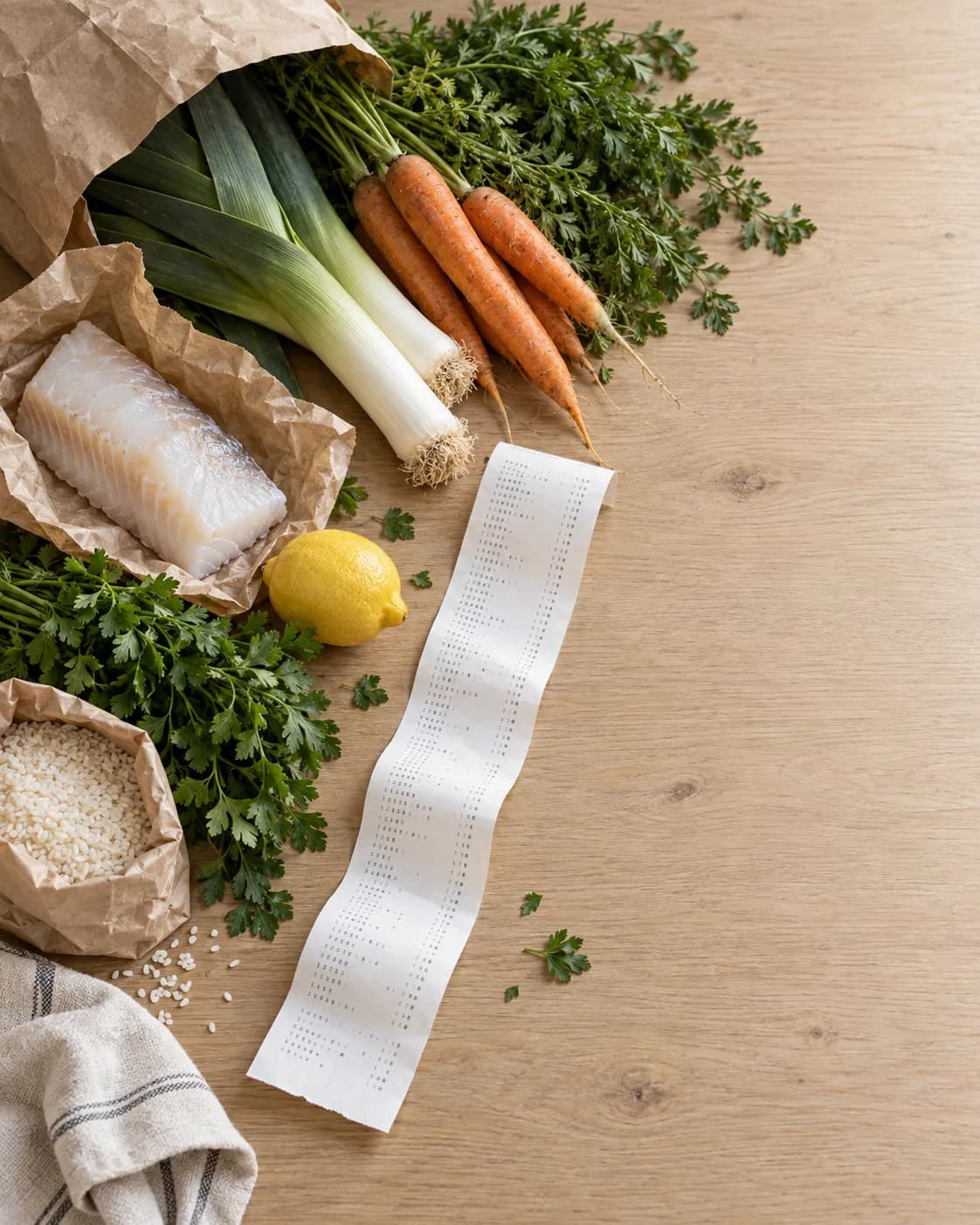
After a shop, take a photo of the receipt. If you've agreed to it (reading a receipt uses AI, so Tonight asks for your consent first), cryptic lines like LEEKS, CARROTS 2LB and PARSLEY FLAT become ingredients. Then you get the final say. You tick the matches that are right, and only those go into your pantry. Nothing lands there that you didn't approve, and the photo itself is stored privately.
It's a little ticking instead of a lot of typing, and it means the pantry fills itself at the moment you know the most about what's in your bags.
A good shopping list is a subtraction: what the week needs, minus what you already have. Tonight builds yours that way. It takes the dinners you've planned, subtracts the pantry, rounds what's left up to real pack sizes (one pack of cod, two cans of chickpeas, not a random number of grams) and sorts everything by aisle, so you're not doubling back past the dairy.
Items you've ticked stay ticked, items you add by hand stay put, and when the plan changes the list follows.
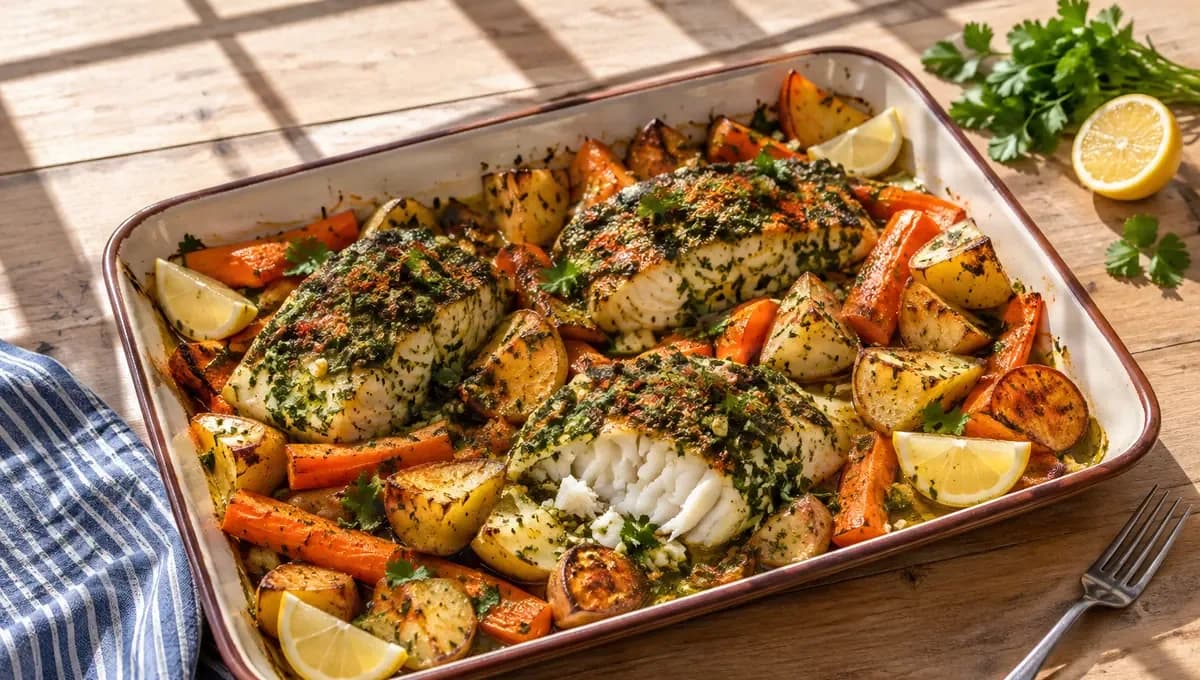
There's a habit from the planning side worth borrowing, too: let two dinners share the perishable thing. A bunch of parsley bought for Wednesday's fish can finish on Thursday's rice, and half a bunch never turns into a bag of dark slime. Tonight plans the week with this in mind, so nights that can share an ingredient are nudged toward each other.
Less in the bin, without a lecture
Most food is thrown away because it was forgotten, not because it was bad. When the week leans toward what's about to turn and the list leaves out what you already own, less gets forgotten. There's no scorecard and no guilt, just fewer sad bags at the back of the crisper drawer. Leftovers count as rescued food too, so cook a little extra of anything that keeps and tomorrow's lunch is already made. And notice what you throw away most often, then buy less of it. The bin is honest feedback about how you really eat.
If you'd like dinner to start from your own fridge, Tonight is free to try for 7 days.