Weeknight dinner ideas that really take 30 minutes
Most 30-minute dinners take longer. Learn to read a recipe's real time, then cook our fastest weeknight dinners, with hands-on and total minutes for each.
By The Tonight team · · 9 min read
A real 30-minute dinner goes from a cold kitchen to plates on the table in half an hour, chopping included. Most recipes that wear the label mean something narrower, usually the cooking alone, timed from the moment the pan is hot. So the number on the page is a claim, and it deserves a quick check before you trust it with a Tuesday.
We checked ours. Of the 148 dinners in the Tonight catalog, 23 list a total time of 30 minutes or less, about one in six. Half of the catalog (74 dinners) is done by 35 minutes, and the median is a little over 35. The steadier number is hands-on time: every dinner asks for 25 minutes of real work or less, and 119 ask for 20 or less. That is the number to shop for.
Why the time on the recipe is a best case
Definition
Active time and total time
Active time is the part of a recipe when your hands are busy: chopping, stirring, flipping, tasting. Total time runs from a cold start to a finished dish, so it also counts everything you wait on, like the oven, the rice or the resting meat.
Recipe writers aren't fibbing. They are measuring something a little different from what you're about to live through, and three habits explain most of the gap.
Knife work gets rounded down. Slicing beef against the grain, cutting broccoli into small florets, grating ginger and mincing garlic looks like a minute or two on paper. Our Chinese-style beef and rice noodles lists 25 minutes, every one of them hands-on, and its own prep step is timed at 12: four ingredients, about three minutes each. That is a realistic pace for a home cook.
Steps overlap, if you let them. Our harissa shrimp couscous is listed at 25 minutes because the couscous steeps off the heat while the tomatoes and shrimp cook in the skillet. Do those one after the other and you add about ten minutes. Overlap is real and it works, but it asks you to keep two pots in your head at once.
Some clocks aren't printed. Preheating the oven, bringing a big pot to a boil, resting meat, thawing. Recipes differ on whether these count, so look. Thawing is the sneaky one on a fast list, because the quickest dinners lean on shrimp and fish, and yours may start frozen. USDA’s Food Safety and Inspection Service puts a pound of sealed frozen food under cold water at an hour or less, with the water changed every 30 minutes. Cooking straight from frozen is safe, but plan on a third to a half more cooking time.
For scale, the Bureau of Labor Statistics found in its American Time Use Survey that Americans 15 and older averaged 0.71 hours a day on food preparation and cleanup in 2025, about 43 minutes. Cleanup is in that number. A recipe's clock stops when the food is on the plate.
| 20 min or less | 5 recipes |
|---|---|
| 21–30 | 18 recipes |
| 31–40 | 86 recipes |
| 41–50 | 23 recipes |
| 51–60 | 9 recipes |
| Over 60 | 7 recipes |
Listed total time in minutes. 23 dinners (16%) are at 30 or under; the median is 35.5 minutes.
Source: Tonight recipe catalog (148 recipes, September 2026)
That tall bar in the middle deserves a second look. Eighty-six dinners sit between 31 and 40 minutes, and 66 of the 148 are listed at exactly 35 or 40. Times cluster on round numbers because they are estimates, so read a 35 as a range. Half an hour is a fine target. It is also a rare one.
How to check a recipe's real time in a minute
You don't need a stopwatch. Read the method the way a cook does, looking for the longest clock you can't hurry and the most jobs you can't overlap.
The one-minute time check
- 1
Find both numbers.
If a recipe gives one time, assume it's the flattering one. A recipe that lists hands-on and total time separately tells you how much of dinner happens without you, and that gap is the useful part.
- 2
Count the cuts.
Every ingredient that is diced, minced or thinly sliced is knife time. Give each a couple of minutes. Our beef and noodles recipe budgets about three per ingredient.
- 3
Find the longest clock.
The oven, the rice, the braise, the thaw. That is your floor, and everything else has to fit inside it or add to it.
- 4
Ask what was not counted.
Preheating, boiling water, thawing, resting, draining. If the protein is frozen, add the thaw.
- 5
Keep your own time.
Give yourself a few extra minutes the first time you cook a dish. Reading ahead and hunting for the second pan cost time nobody prints.
Worked example: where a 28-minute linguine goes
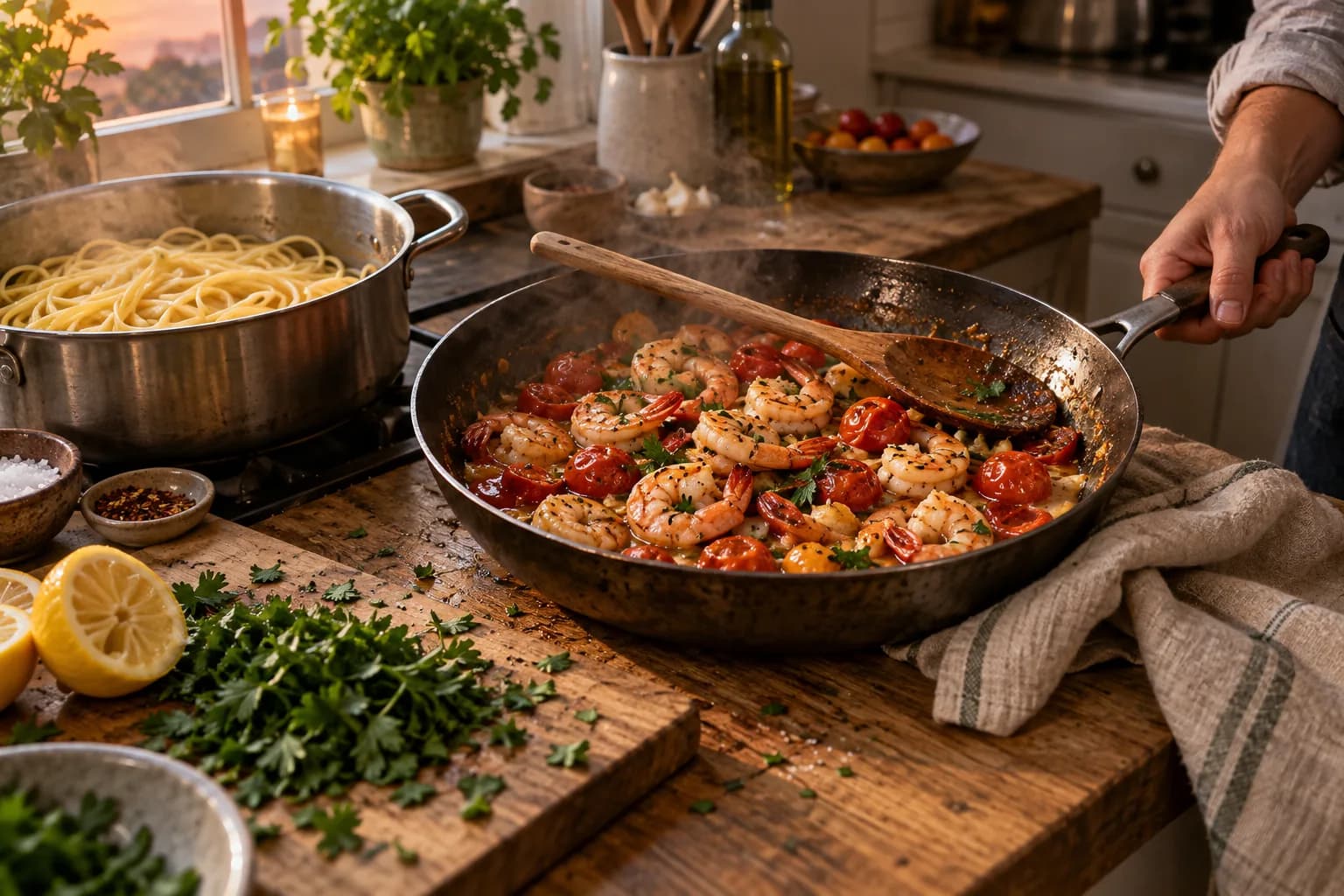
Our garlic shrimp and tomato linguine is listed at 28 minutes, with 18 of them hands-on. Its step timers add up to 27 if you ran them back to back: 12 for the pasta, 7 for the garlic and tomatoes, 5 for the shrimp, 3 to toss. But the pasta boils while the sauce cooks, so the timed cooking is really 12 plus 3, or 15 minutes. That leaves about 13 minutes of the listed 28 for what the timers skip: peeling shrimp, halving tomatoes, slicing garlic and getting the water to a boil. Nothing here is hidden. You just have to do the subtraction once.
What actually makes a dinner fast
Dish type helps less than you would expect. In our catalog pasta is quickest, with a median of 28 minutes (from just five recipes), then sandwiches at 30 (three recipes). Stir-fries, which have a reputation for speed, land at 35, level with grain bowls, because there is rice or noodles to cook beside the wok.
Ingredients say more. Eleven of our 23 dinners at 30 minutes or under are built on shrimp, salmon, cod or tuna, though seafood appears in only about a quarter of the catalog (38 of 148). In our recipes shrimp spend around five minutes in the pan, and a cod fillet bakes over beans in twelve. Fish and shellfish are quick because there is almost nothing to do to them, and the fast list is mostly that plus a sauce that builds itself in the same skillet. Four cuisines (Middle Eastern, American, Mexican and Italian) supply 17 of the 23.
Because the cooking is so short, use a thermometer. USDA's safe minimums, measured with a food thermometer, are 145°F (63°C) for fish and shellfish and 165°F (74°C) for poultry.
Ten of our fastest dinners, with both clocks
Here are ten of the quickest, all from the free recipes. Hands-on time is the work you do, and total is start to table, as listed. The first row carries a caveat: 15 minutes is the shortest time in the catalog, and it assumes brisk knife work.
| Dish | Hands-on (min) | Total (min) | Cuisine |
|---|---|---|---|
| Shawarma Chicken & Couscous | 15 | 15 | Middle Eastern |
| Harissa Shrimp & Tomato Couscous | 15 | 25 | Middle Eastern |
| Chinese-Style Beef, Broccoli, and Rice Noodles | 25 | 25 | Chinese |
| Cheddar & Broccoli Macaroni | 18 | 26 | American |
| Creamy Chicken & Spinach Penne | 18 | 28 | Italian |
| Garlic Shrimp & Tomato Linguine | 18 | 28 | Italian |
| Lemon Cod & Cannellini Beans | 15 | 30 | Italian |
| Chickpea & Spinach Shakshuka | 15 | 30 | Middle Eastern |
| French-inspired Garlic Shrimp & Beans | 15 | 30 | French |
| Pinto Bean & Queso Fresco Quesadillas | 20 | 30 | Mexican |
Times as listed in the Tonight catalog, September 2026. Every recipe is written for four and scales to the people eating.
Six to cook this week
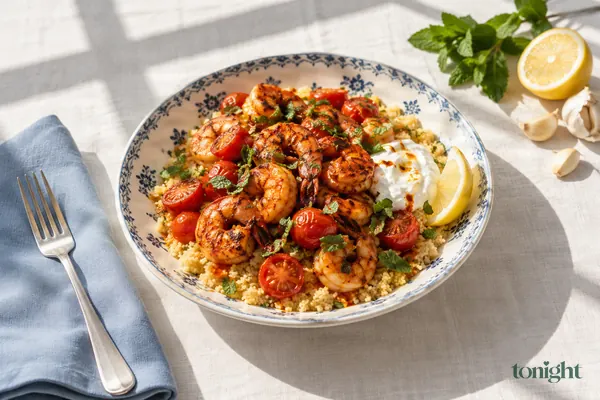
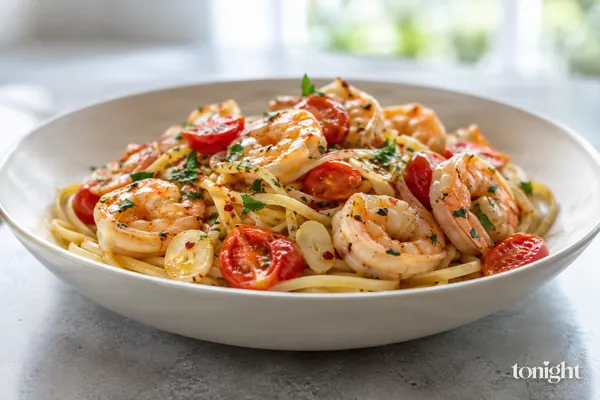
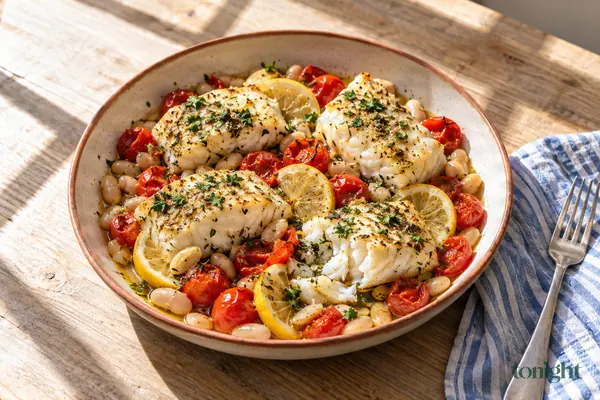
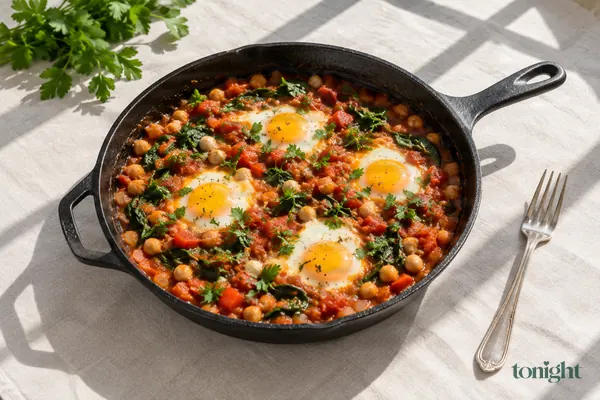
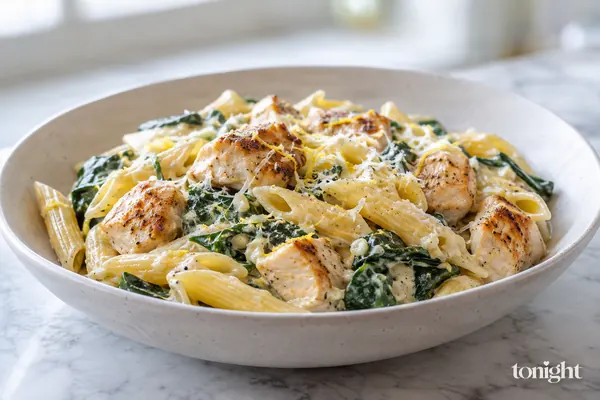
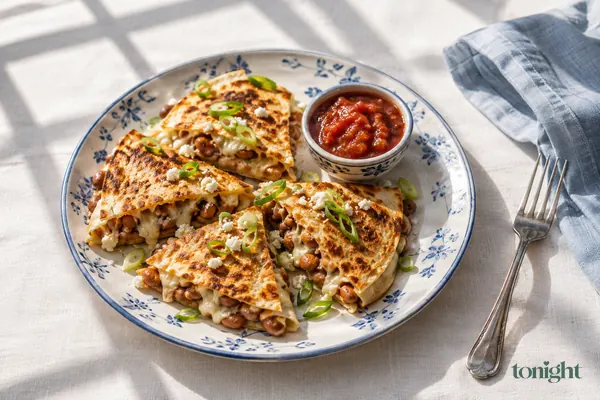
Notice how little separates them. Nine of the ten list 15 to 20 minutes of hands-on time inside a total of 30 or less, so the difference between a good fast dinner and a merely quick one is how much you are doing at once.
Buy back time without hunting for a faster recipe
The best savings usually come from choosing a different kind of dinner, not a shorter recipe.
Start the longest clock first. Rice, couscous and the oven are the slow parts of most dinners, so set them going before you pick up a knife.
Prefer hands-off to fast. Across the catalog the median gap between hands-on and total time is 18.5 minutes, so for most dinners you are needed for about half the clock. Our traybakes push that furthest: a median total of 45 minutes, only 18 of them yours, the biggest gap of any dish type. The sheet pan dinners guide covers how they work.
Let the freezer do the slow cooking. A curry or stew made on a calm Sunday turns a Thursday into reheating. The freezer-friendly dinners guide covers which ones hold up.
Keep a short list of staples. The store run shrinks when the shelf does the work, and our pantry staples list shows which 44 ingredients cover most dinners.
Decide earlier. Much of a quick dinner's stress is deciding it at 5:47. Choosing at lunchtime costs nothing, and the 5:47 problem is about exactly that.
On the nights that only allow twenty minutes, Tonight's “I have 20 minutes” button looks for the fastest safe dinner you can make right now, checked for everyone who is home. If nothing safe fits, it tells you so and leaves your plan alone. Browse recipes filters by hands-on time as well, which is the number this article says to trust. Tonight is free to try for 7 days.
Questions people ask
What counts as a 30-minute dinner?
One that goes from a cold kitchen to the table in 30 minutes, prep included. Many recipes count only the cooking, so check whether the total covers chopping, preheating and resting. In our catalog, 23 of 148 dinners list a total of 30 minutes or less.
What is the difference between active time and total time?
Active time is the work you do. Total time is start to table, including waiting. A dinner with 15 active minutes and 45 total gives you half an hour to do something else.
What are the fastest proteins to cook for dinner?
In our recipes, shrimp spend about five minutes in the pan and a cod fillet bakes in 12, which is why seafood fills nearly half of our 30-minute list. Cook fish and shellfish to 145°F (63°C) and poultry to 165°F (74°C), checked with a thermometer.
Is it faster to cook dinner from frozen?
Rarely. Cooking without thawing is safe, but extension services say to allow a third to a half more time. Thawing sealed food in cold water takes an hour or less per pound, with the water changed every 30 minutes.
Are 15-minute dinners realistic?
Sometimes. The shortest time in our catalog is 15 minutes, for a shawarma chicken and couscous that is hands-on the whole way through. It works if your vegetables are easy to cut and you keep both pans moving. Give yourself a few extra minutes the first time.
How do I know if a recipe's time is realistic?
Look for separate hands-on and total times, count the ingredients that need cutting, and check for steps the total leaves out, such as thawing or preheating. Then time yourself once and trust the recipe writer accordingly.
Sources
- 1.Tonight recipe catalog (148 recipes, September 2026) — Total and hands-on times, dish types and step timers for all 148 recipes.
- 2.U.S. Bureau of Labor Statistics, American Time Use Survey, Table 1 (2025 annual averages) — 0.71 hours a day on food preparation and cleanup.
- 3.USDA Food Safety and Inspection Service, Safe Minimum Internal Temperature Chart — 145°F for fish and shellfish, 165°F for poultry (USDA PDF, hosted by K-State Research and Extension).
- 4.USDA Food Safety and Inspection Service, The Big Thaw: Safe Defrosting Methods — Cold-water thawing times, and about 50% more time when cooking from frozen.
- 5.Ohioline (Ohio State University Extension), Freezing Cooked Foods, HYG-5308 — One-third to one-half more cooking time when cooking from frozen.